What Is Your Learning Style?

A Simple Test to Reveal It

How People Absorb Information Differently

People don’t absorb information the same way, and that isn’t a flaw; it is a feature of human cognition. Variation shows up in sensory channels, motivation, prior knowledge, and the context in which new ideas are encountered. Across classrooms, teams, and self-paced study, the craft of personalization is about aligning materials and methods with the situation, the goal, and the learner’s habits.

In practical terms, educators and coaches use learning styles as a shorthand to discuss habitual ways people encode, store, and retrieve information. The concept can be misapplied when it turns into labeling or rigid sorting, yet it can be productive when it starts a conversation about strategies and fit. Rather than chasing a single pathway, wise learners assemble a toolkit for reading, practice, explanation, and application. That toolkit grows stronger when methods are matched to task complexity and when feedback loops are fast and clear.

Map How You Learn

By noticing patterns in your attention, memory, and motivation, you begin to map how you learn within real tasks and contexts. Journaling, coaching conversations, and brief self-audits illuminate what helps you stay engaged and what derails progress. Over time, these insights shape more deliberate choices about note-taking, scheduling, and collaboration. Small tweaks compound, and consistency beats intensity.

Map How You Learn

Flexible Strategies Using a Learning Style Assessment

When used carefully, a structured learning style assessment can spark reflection while avoiding rigid labels. Rather than telling you what you can or cannot do, a short survey can highlight tendencies that you can test and refine through practice. The key is to pair any insights with measurable outcomes so you can decide what genuinely works.

Rather than fixed traits, many researchers view learning preferences as dynamic tendencies shaped by task demands and prior experience. This framing emphasizes flexibility: switch tools when the context shifts, and cultivate complementary strategies for complex topics. Flexibility prevents overreliance on one comfort zone and accelerates skill growth. For reflective self-audits, a concise learning style inventory can help you catalog habits that either support or derail progress. Track what happens when you annotate diagrams, narrate steps aloud, teach someone else, or simulate scenarios. Then compare outcomes across methods and double down on the combinations that deliver consistent results.

Anchor personalization to goals, not to labels.
Triangulate self-report with performance data.
Mix modalities to deepen understanding and retention.

How Diffirent Learning Models Boost Study and Growth

Across decades, several models have helped people talk about common patterns in study habits and instruction. Each framework shines a light on a specific dimension of cognition or experience, and each can be used flexibly to guide design choices rather than to pigeonhole a learner. Selecting a tool is ultimately about the question you are trying to answer and the actions you plan to take next.

Model Best Use Case Key Strengths Typical Cautions
Four-Mode Sensory Choosing input formats for new material Simple language and quick adoption Risk of oversimplifying complex tasks
Experiential Cycle Designing cycles of practice and reflection Emphasizes doing, reflecting, and iterating Needs time and structure to execute well
MI Framework Spotlighting broader strengths across domains Encourages diverse tasks and roles Not a shortcut to job fit or outcomes alone

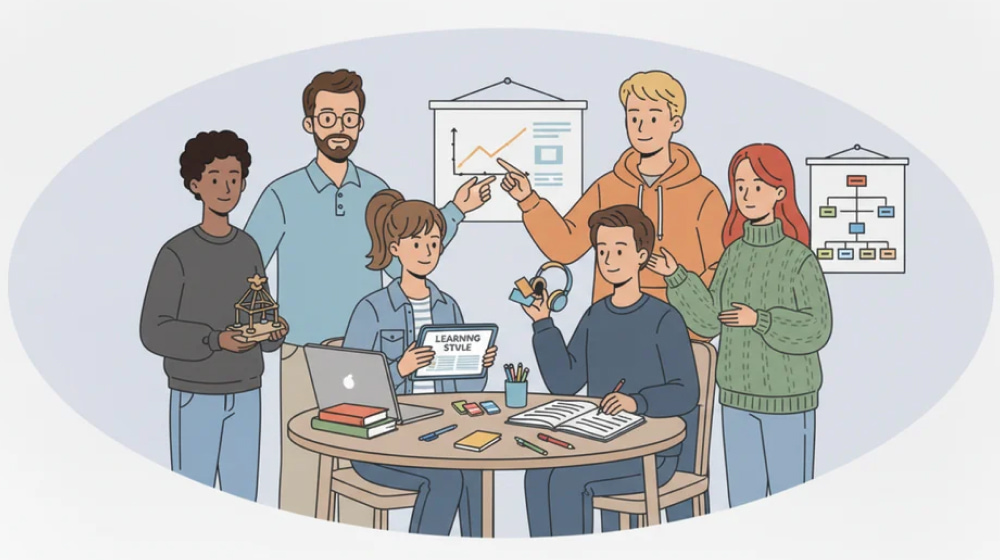
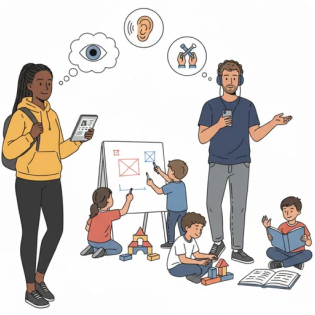
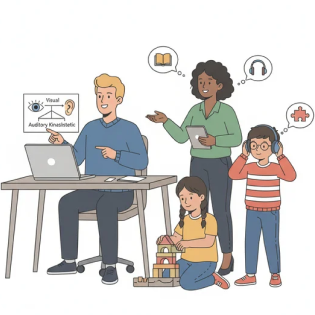
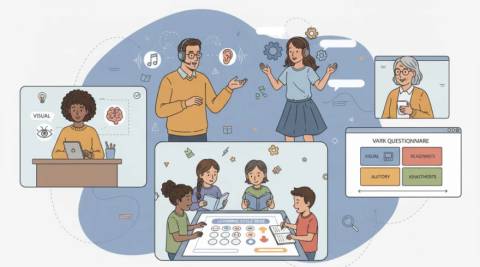
One well-known sensory framework, sometimes abbreviated as VARK, categorizes tendencies around visual, aural, reading–writing, and kinesthetic cues. This lens can help you diversify inputs when first encountering a topic and then consolidate with output activities. Blended methods often outperform single-track approaches for complex skills. To collect quick impressions, practitioners may employ a brief VARK questionnaire alongside performance data and interviews. Pair short surveys with task walkthroughs, and observe how choices change under time pressure or when stakes are higher. Context reveals far more than a form alone.

Experiential models add depth, and the Kolb learning style inventory links preferences to a cycle of concrete experience, reflection, conceptualization, and experimentation. This process-oriented view helps structure labs, simulations, peer teaching, and retrospectives. The emphasis on iteration makes it ideal for projects and skill acquisition. Broader profiles are sometimes explored through a multiple intelligences test that spotlights strengths across linguistic, spatial, or interpersonal domains. While not a predictor of destiny, this perspective can encourage varied demonstrations of understanding. Variety increases engagement and uncovers hidden talents.


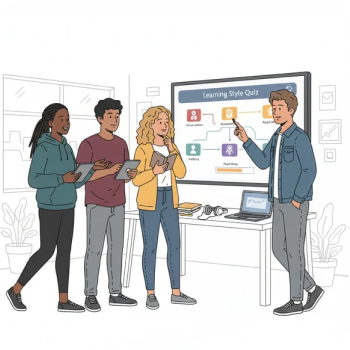
Before diving into tools, remember that any learning styles test is a snapshot that should be triangulated with authentic task performance. Treat results as hypotheses to be tested in the wild. The more you experiment, the clearer your personal playbook becomes. For low-stakes exploration, a short learning style quiz can prime metacognition without implying fixed ability. Pair the quiz with a deliberate practice plan that includes spaced repetition, retrieval practice, and multisensory encoding. Then measure whether scores, speed, or accuracy improve.

Observe, Reflect, and Discover How You Learn

If curiosity rises and you wonder what is my learning style, start by journaling how you approached a recent complex task. Capture where you hesitated, what boosted momentum, and which resources made ideas click. A few cycles of this exercise reveal patterns faster than guesswork.

Clarity grows when mentors observe you in action, because identifying your learning style benefits from outside perspectives and specific feedback. Invite a coach or peer to watch a study session or a practice run, and compare notes. Alignment between self-perception and observed behavior is the goal.

Define a concrete outcome to evaluate methods fairly.
Test one change at a time to isolate effects.
Refresh your approach as goals evolve.
Discover Your Learning Styles With a VARK Assessment

Within digital courses, designers can enhance engagement when modules respect learning styles online learning considerations such as multimodal content and flexible pacing. Short videos, transcripts, diagrams, and hands-on mini projects create complementary pathways to understanding. Threaded discussions and quick polls maintain social presence. When planning study sessions, account for different types of learning styles by alternating input channels and response formats.

Chunk material into manageable segments with clear outcomes.
Blend synchronous touchpoints with asynchronous practice.
Use low-friction feedback to guide the next action.

FAQ: Practical Answers for Learners and Educators

How can I personalize study without overcomplicating my routine?
Start small by choosing one unit or project and testing two contrasting strategies, such as diagramming versus explaining aloud. Track time spent, comprehension, and recall a day later, and keep the approach that clearly outperforms the other. Repeat this cycle and your routine will evolve naturally.
Do style frameworks mean I should avoid certain methods?
No, they are lenses for choosing a starting point, not rules that restrict options. Use them to diversify input and output, then validate choices with performance data. The most effective approach is usually a blend tailored to the task and goal.
What’s the quickest way to spot unhelpful habits?
Record a short session of yourself studying or practicing, then review the footage with a checklist that notes focus breaks, ineffective note-taking, and shallow processing. Replace one weak habit with a stronger alternative and reassess after a week to confirm improvement.
How do instructors support diverse study tendencies in one course?
Design with multiple paths to comprehension and demonstration, such as visuals, narratives, and hands-on tasks. Provide clear rubrics, prompt feedback, and optional enrichment that appeals to varied strengths. Small, well-planned choices can serve everyone without diluting rigor.
What metrics show that personalization is working?
Look beyond satisfaction to changes in accuracy, speed, transfer to new problems, and long-term retention. Track these indicators across several cycles and compare against previous baselines. When improvements persist under different conditions, the adjustment is paying off.

The Latest News

VARK Model Learning Styles: A Comprehensive Guide
Discover Your Learning Styles With a VARK Assessment Get Started Origins, Purpose, and Why This Framework Matters Today Every learner processes information through a unique blend of senses, habits, and contextual cues, and that variability often explains why one lesson sparkles for on...
Learning Style Quiz: A Comprehensive Guide for Parents and Teachers
Discover Your Learning Styles With a VARK Assessment Get Started What Learning Preferences Mean for Growing Minds Every child builds knowledge through a unique blend of senses, interests, and experiences, and recognizing those patterns can transform both motivation and mastery. When w...
Mastering Exam Prep: A Complete Guide to Studying for Any Test
Discover Your Learning Styles With a VARK Assessment Get Started Great test preparation feels less like cramming and more like strategic training. You identify what matters, practice deliberately, and monitor your progress with sharp, honest data. The result is confidence that comes fr...

Please Note

This website (learning-styles-test.net) is not an official representative, creator or developer of this application, or product. All the copyrighted materials belong to their respective owners. All the content on this website is used for educational and informative purposes only.