Discover Your Learning Styles With a VARK Assessment
What This Test Reveals About How People Learn
Every learner carries a distinctive pattern of preferences for taking in information, processing it, and applying it to real tasks. The VARK framework groups these tendencies into four approachable modalities, Visual, Aural, Read/Write, and Kinesthetic, creating a shared vocabulary for conversations about effective study and instruction. Rather than boxing people into rigid categories, it highlights flexible routes to comprehension. When individuals recognize how they best absorb explanations, examples, and practice, they can select methods that amplify clarity, retention, and transfer to new contexts.
In education and workplace development, a clear picture of modality patterns shortens the path from exposure to mastery by aligning materials and activities with cognitive comfort zones. In many classrooms, educators deploy the VARK assessment to surface modality preferences before major units, thereby shaping lectures, slides, and hands-on tasks with intention. Teams also benefit when managers tailor onboarding and documentation to match how colleagues digest procedures and policies most efficiently. Crucially, the model encourages experimentation: learners can mix channels, such as diagrams plus brief summaries, to reinforce new concepts through multiple cues.
Because VARK encourages practical adjustments, it helps learners recalibrate when something isn’t sticking. If a concept feels abstract, a quick pivot, like sketching a flowchart, listening to a brief explanation, or building a physical mockup, can unblock understanding. Over time, this reflective cycle cultivates metacognition, the habit of monitoring comprehension and selecting the next-best strategy with agility. That self-directed flexibility is often the difference between plateauing and compounding progress across courses, certifications, and career milestones.
Inside the Four Modalities and the Science Behind Them
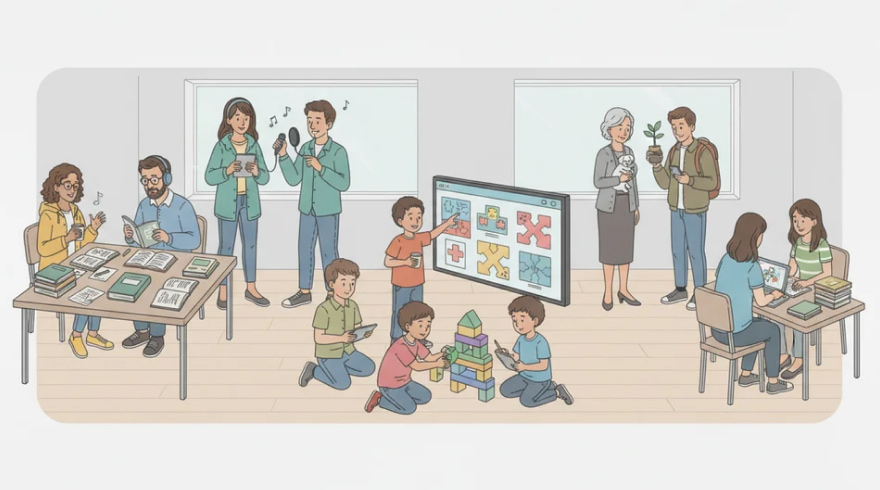
Visual learners often gravitate toward charts, spatial layouts, arrows, and color-coded cues that let relationships pop instantly. Aural-inclined learners tune into cadence, examples voiced aloud, and conversational back-and-forth that clarifies nuance. Readers and writers prefer distilled text, structured headings, and succinct bullet points that can be annotated and reviewed. Kinesthetic learners feel most confident when manipulating examples, simulating processes, and connecting concepts to concrete experiences. While many people show a blend, noticing which channel accelerates comprehension in a given moment can dramatically improve fluency.
Educators frequently treat a targeted inventory as a gateway to dialogue, and they position a concise learning style assessment within orientation to guide material design. Program coordinators sometimes complement that baseline with a departmental learning styles assessment during curriculum mapping, which prompts teams to balance visuals, discussion, text, and activity across modules. Cognitive research supports this variety: dual coding, retrieval practice, and elaboration all benefit when explanations are presented through complementary channels that reduce extraneous load. The net result is more durable knowledge, fewer misunderstandings, and a smoother path from theory to performance.
- Visual signals: diagrams, timelines, infographics, process maps, and annotated screenshots.
- Aural signals: narrated walkthroughs, debates, podcasts, and office-hour clarifications.
- Read/Write signals: checklists, briefs, standard operating procedures, and glossaries.
- Kinesthetic signals: labs, case simulations, role-play, prototyping, and field observation.
Benefits, Outcomes, and Practical Use Cases
When adopted thoughtfully, VARK becomes a lever for equity, because it ensures that crucial ideas appear in multiple forms rather than a single privileged channel. Students who struggle with dense lectures may thrive when they receive a simple process sketch, while colleagues who dislike lengthy documents may prefer a spoken overview followed by a hands-on demo. Instructors and trainers who vary their delivery watch engagement stabilize, misunderstanding decline, and formative checkpoints become more diagnostic and less punitive.
Course designers often introduce a succinct intake activity, and they use a calibrated VARK learning assessment to align early resources with participant needs. Organizations running certification tracks commonly place a brief learning assessment near the start of a program, which helps facilitators schedule a mix of visuals, conversations, concise briefs, and practical labs. These choices ripple into measurable outcomes: quicker time-to-competence, reduced rework, and higher confidence when learners encounter real-world tasks. Perhaps most importantly, VARK normalizes the idea that there are multiple legitimate ways to grasp complex material, which reduces stigma and builds momentum.
- Fewer comprehension bottlenecks due to diversified presentation of key ideas.
- Higher retention through spaced review supported by modality-friendly artifacts.
- More inclusive materials that accommodate neurodiversity and language backgrounds.
- Clearer feedback loops because learners can request support in specific formats.
Modalities at a Glance: Strategies You Can Apply Today
A quick reference makes it easier to translate insights into action during lesson planning, tutoring, or self-study. Rather than overengineering each resource, select one or two primary channels per concept and add a lightweight complement. For example, a timeline can anchor the big picture while a short narrated clip clarifies tricky transitions. Over time, you’ll build a reusable library of clean visuals, crisp text briefs, short audio explainers, and tactile exercises that can be remixed across topics.
Program leads who manage resource libraries often catalog artifacts by channel, and they periodically audit inventories with modern learning style assessment tools so gaps become visible. The matrix below highlights modality strengths and gives concrete tactics that educators, mentors, and independent learners can deploy immediately.
| Modality | Typical Strengths | Try These Strategies |
| Visual | Pattern spotting, spatial reasoning, rapid overview of relationships | Flowcharts, swimlane diagrams, timelines, color-coded note systems |
| Aural | Nuance through tone, recall from dialogue, story-driven understanding | Q&A sessions, narrated walkthroughs, debates, short voice notes |
| Read/Write | Precision, structured recall, independent review and annotation | One-page briefs, checklists, headings, glossaries, concise summaries |
| Kinesthetic | Application under real constraints, procedural memory, improvisation | Labs, case simulations, prototyping, physical models, field observation |
| Blended | Flexibility across contexts, cross-reinforcement of ideas | Pair a visual with a micro-brief, add a short audio recap to a demo |
When you’re short on time, choose a dominant modality for clarity and add a secondary modality for reinforcement. For instance, a concise one-pager can accompany a lab, or a schematic can sit beside a narrated mini-lecture. These pairings multiply cues without overwhelming learners or overextending creators.
Implementing VARK in Courses, Teams, and Personal Routines
Start with discovery, not labels. Invite participants to try several representations of the same concept, then reflect on which version felt clearest and why. Use that feedback to adjust the next session before cementing plans for an entire term. In remote settings, pair visual aids with transcripts and add short practice tasks that test understanding quickly, so learners can pivot to a different channel when confusion arises. Onsite workshops can weave mini-demos and whiteboard sketches into discussions to keep energy high and ideas concrete.
In coaching sessions that target metacognitive growth, practitioners often blend reflection prompts with a guided learning style and self assessment so clients articulate how they plan, review, and troubleshoot. Individuals who prefer journaling may boost momentum by completing a concise learning style self assessment before setting weekly study goals, because the results inform which artifacts to prepare, like a process map, a short outline, or a checklist, before tackling demanding material. Whatever the context, the goal is the same: build a lightweight habit of choosing the right channel for the next hurdle, then iterating based on results.
- Plan: pick a primary channel and one backup for each key concept.
- Produce: create minimal, high-signal artifacts that are easy to revise.
- Pilot: test with a small group, collect comments, and refine quickly.
- Persist: archive re-usable assets and tag them by modality for easy reuse.
Bridging to Other Theories and Models
No single model captures the full texture of human ability, so it helps to cross-reference complementary perspectives. VARK centers on preferred input and expression channels, while other frameworks describe talents, strengths, and environmental factors that shape performance. By triangulating across approaches, educators and leaders avoid overgeneralization and craft experiences that respect both preference and purpose. This layered view supports thoughtful differentiation without diluting shared standards or expectations.
Some institutions combine a modality inventory with a broader multiple intelligences assessment to explore how learners reason with language, logic, space, music, body movement, and interpersonal dynamics. Advanced programs sometimes incorporate a formal assessment of multiple intelligences alongside VARK-derived tactics, which helps curriculum teams map tasks to both preferred channels and domain-specific capabilities. The payoff is a unified plan that aligns tasks, supports, and metrics, yielding environments where learners can approach the same objective through different but equally rigorous routes.
- Blend modality supports with strength-based projects that honor diverse talents.
- Use common rubrics so varied paths lead to comparable evidence of mastery.
- Iterate regularly, pruning clutter while preserving essential multimodal cues.
FAQ: Clear Answers to Common Questions
How accurate is a modality inventory, and how should I use the results?
These tools provide a snapshot of preference, not a fixed identity. Treat results as a starting point for experimentation: pair your dominant channel with a complementary one, test what sticks, and refine your study or teaching plan based on outcomes. Accuracy improves when you revisit results periodically and compare them with performance data and learner reflections.
Can preferences change over time or across subjects?
Yes, context matters. Many people notice different channels work better for distinct tasks, visuals for systems thinking, conversation for conceptual nuance, text for precise definitions, and hands-on practice for procedures. Track what works by topic and by task, then deliberately diversify your toolkit as the demands of the material shift.
Where can I find a no-cost option to explore my preferences?
Many universities and training groups host short questionnaires, and some publishers provide starter inventories at no charge, including a streamlined learning style assessment free option offered during orientation or open-house events. Begin with a quick screen, try a small change in your study routine, and evaluate whether comprehension and recall improve.
How can teachers and managers apply insights without overwhelming preparation time?
Think in templates. Keep a small set of reusable artifacts, diagram frames, one-page briefs, short audio intros, and mini-labs, that can be adapted for each lesson. Rotate which channel takes the lead per concept, add one complementary support, and retire anything that doesn’t add clarity.
What metrics demonstrate impact beyond positive learner feedback?
Look for earlier mastery on threshold topics, fewer clarification requests on known pain points, and improved performance on authentic tasks that mirror real-world demands. Many teams also track reduced rework and faster onboarding, and they roll these findings into periodic reviews of learning assessments to keep resource investments aligned with outcomes.